We use cookies to enhance your browsing experience and analyze site traffic. By continuing to use this site, you agree to our cookie policy. Privacy Policy

Lightweight Tools

Free-to-Use AI Toolkit

A practical toolkit spanning sequence analysis, structure prediction, protein information lookup, and antibody risk assessment. No setup or coding required. Researchers can complete professional analyses through natural-language interaction and stay focused on the science.

Toolkit Overview

22
Total Tools
Free
Price
5 runs / 4h
Usage Limit
< 2 min
Avg. Duration

Design Philosophy

"Routine antibody research tasks—sequence numbering, physicochemical analysis, and structure retrieval—often require several online tools or custom scripts. Our conversational toolkit brings these tasks together so researchers can run them in natural language."
Protein Information Lookup

Protein Information Lookup

Find proteins, retrieve information, annotate domains, and convert concentrations

  1. UniProt ID Search

    Search by protein or gene name and species to find matching UniProt entries and IDs.

  2. Protein Information Retrieval

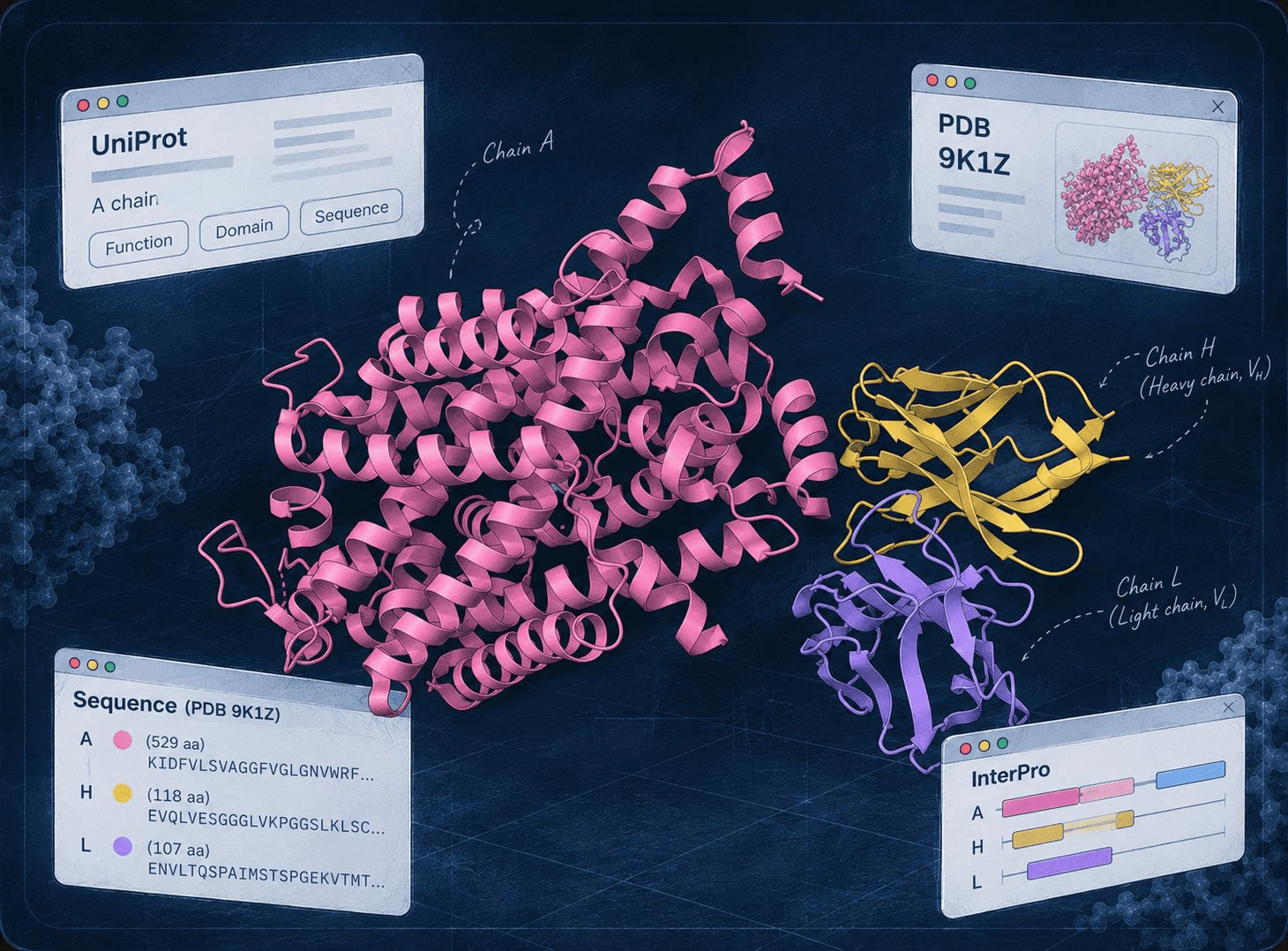
    Retrieve authoritative protein and structure metadata using a UniProt or PDB ID.

  3. PDB Structure Information Retrieval

    Retrieve structural information for a PDB entry and its UniProt mappings.

  4. Protein Domain Annotation

    Retrieve sequences from UniProt and overlay InterPro annotations to generate domain maps.

  5. Protein Concentration Conversion

    Convert between molar and mass concentrations and report molecular weight.

Sequence Analysis

Sequence Analysis

Explore sequence features, clustering, alignments, and evolutionary relationships

  1. Protein Physicochemical Analysis

    Concatenate sequences and calculate molecular weight, isoelectric point, and amino acid frequencies.

  2. Antibody Sequence Visualization

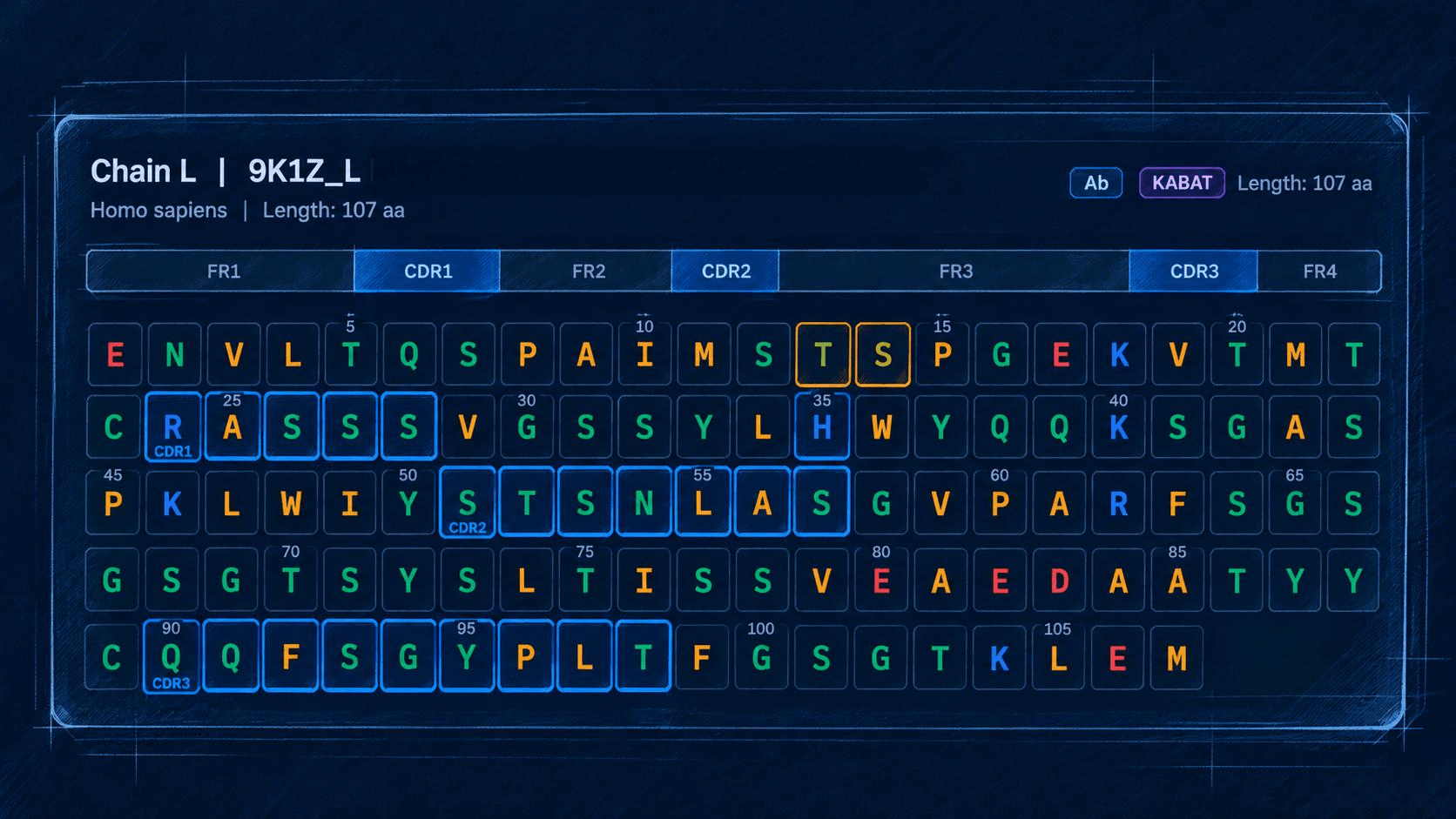
    Apply IMGT, Kabat, Chothia, and Martin numbering to antibody sequences and annotate CDR and FR regions.

  3. Sequence Clustering

    Cluster protein or antibody sequences with MMseqs2 based on similarity and coverage.

  4. Multiple Sequence Alignment

    Align protein sequences with MAFFT and generate alignments, similarity matrices, and visualizations.

  5. Protein Phylogenetic Tree Construction

    Build unrooted phylogenetic trees from multiple sequences using MAFFT and FastTree.

Structure & Interaction Analysis

Structure & Interaction Analysis

Retrieve and predict structures, then explore structural comparisons, features, and interactions

  1. AlphaFold Structure Retrieval

    Retrieve AlphaFold2 predicted structures and PAE plots by UniProt ID.

  2. Antibody Structure Prediction

    Predict three-dimensional structures of VHHs or monoclonal antibodies with ImmuneBuilder.

  3. Chai-1 Structure Prediction

    Predict complex structures from one or more input sequences using Chai-1.

  4. PDB Sequence Extraction

    Export sequences for each chain from PDB or mmCIF structures.

  5. Structural Alignment

    Align two or more macromolecular structures with US-align and report TM-score, RMSD, and other metrics.

  6. Structural RMSD Calculation

    Calculate RMSD between two chains from PDB or mmCIF structures.

  7. PDB Structure Cluster Analysis

    Perform sequence clustering and structural alignment on PDB structures associated with a UniProt ID.

  8. Secondary Structure & SASA Calculation

    Assign secondary structures with DSSP and calculate solvent-accessible surface area with FreeSASA from existing 3D coordinates.

  9. Interaction Residue Analysis

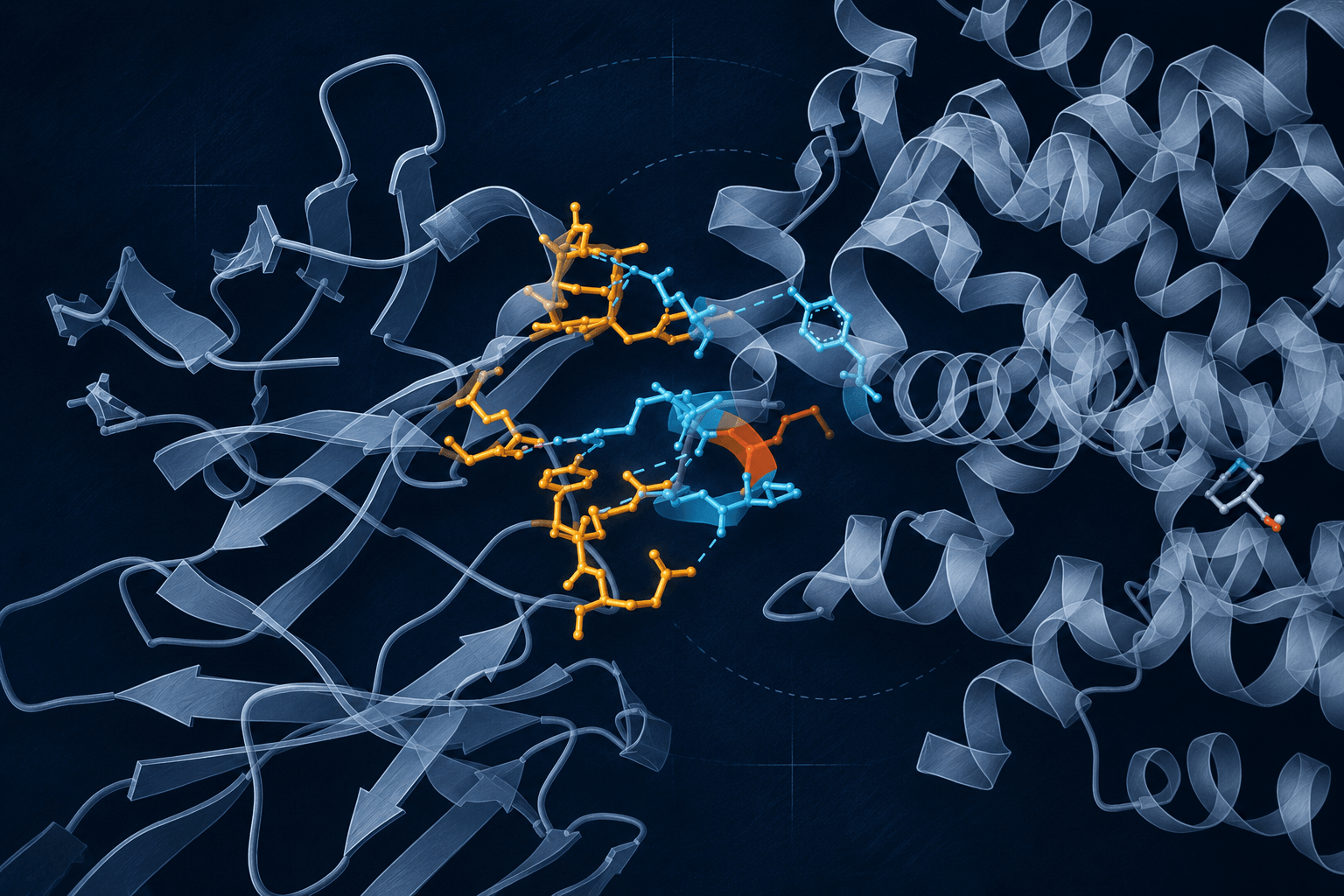
    Identify epitope and paratope residues at protein–protein interfaces.

  10. PLIP Interaction Analysis

    Analyze interaction types within structures using PLIP and generate visualization files.

Antibody Developability & Risk Assessment

Antibody Developability & Risk Assessment

Explore variable-region analysis and targeted modification and degradation liabilities

  1. Comprehensive Antibody Variable Region Analysis

    Batch-process numbering, chain typing, germline assignment, CDR/FR extraction, PTM scoring, and quality control.

  2. Antibody Liability Site Analysis

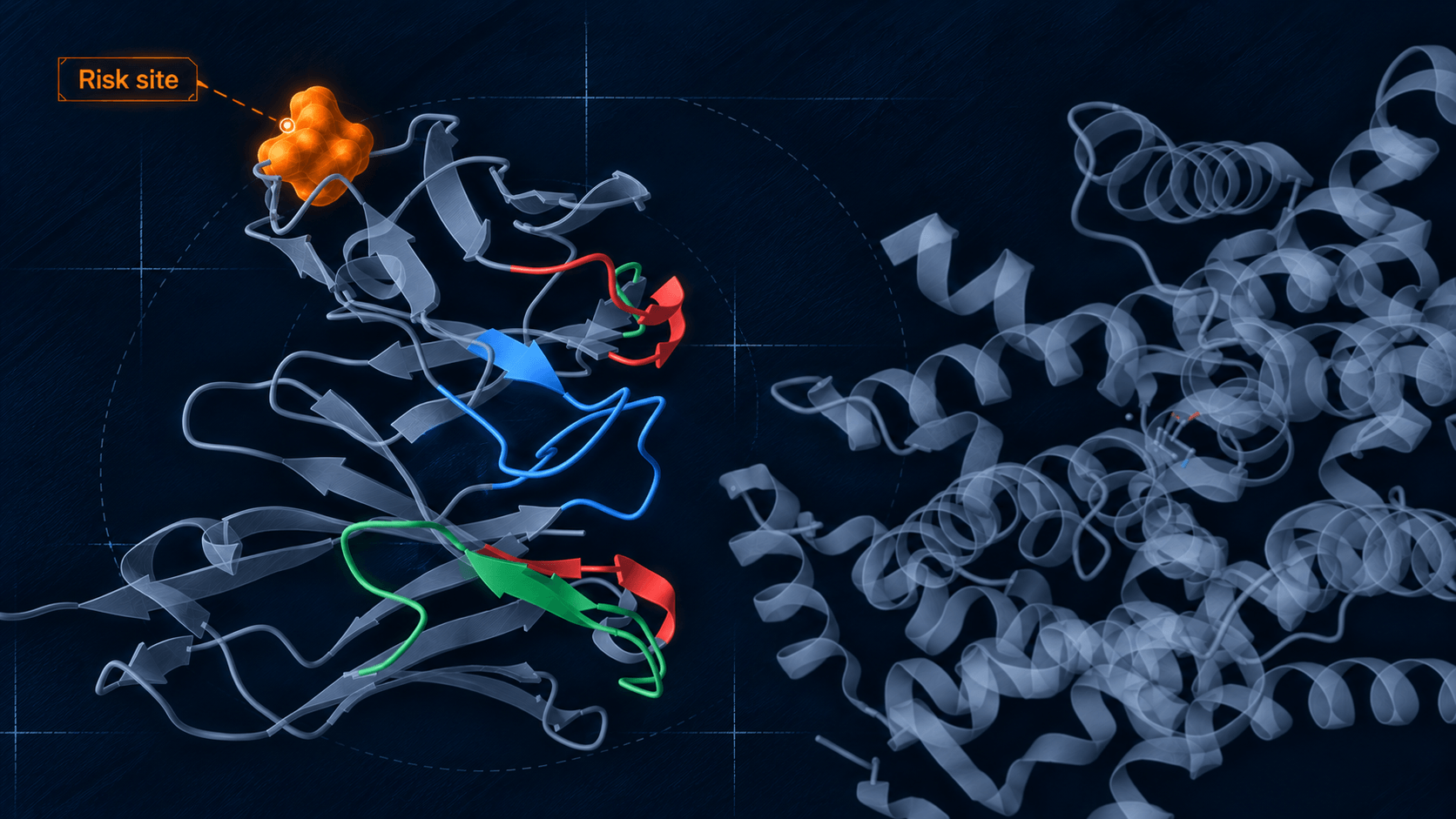
    Scan antibody sequences for modification and degradation liabilities, including deamidation, oxidation, and glycosylation.

Need a broader developability assessment? Explore Antibody Developability Assessment

Use Cases

Use Cases and Outputs

Use lightweight tools for routine research tasks such as information lookup and sequence or structure analysis. Get quick checks, visualizations, and clearer inputs for subsequent design and analysis workflows.

About 2 minFree5 runs / 4h

Best-Fit Scenarios

You need quick protein information lookup, sequence analysis, or structure analysis
You need to check sequence, structure, or liability information before submitting a formal project
You need visualization images or concise analysis results for internal discussion

Inputs to Prepare

UniProt ID, protein/antibody sequence, FASTA, or structure file
The sequence, structure chain, interaction partner, interface, or numbering scheme to analyze
Specific analysis goal, such as information lookup, alignment, structure prediction, RMSD, or liability-site detection

What You Receive

Quick analysis report
Structure and sequence visualization
Result images

What are the Click.mAb. free antibody tools?

A set of free AI utilities for everyday antibody R&D, covering sequence analysis, protein structure prediction, information lookup, visualization and liability-site assessment.

What can I analyze with these tools?

Antibody/protein sequence analysis, structure prediction and visualization, RMSD alignment, UniProt information lookup and liability-site detection, among other frequent tasks.

What inputs are supported?

UniProt IDs, protein/antibody sequences, FASTA files, and PDB/CIF structure files.

Are these antibody tools free to use?

Yes. They are free, with 5 runs every 4 hours and results in about 2 minutes — ideal for quick daily analysis.

Ready to Get Started?